































.png?width=444&height=266&name=Student-support%20(1).png)




.png?width=318&height=279&name=Evanston(tile).png)



.png?width=318&height=279&name=Teams%20Edweb%20(6).png)

.png?width=318&height=279&name=Best_Small_Workplaces-2026(no-text).png)




.png?width=1436&height=956&name=Eliminating%20Data%20Silos%20(preview).png)
District leaders can’t improve what they can’t see. Large districts generate enormous amounts of important student data every day, but too often, it lives in disconnected systems. When data is siloed, it is nearly impossible to track district-wide trends, see connections, allocate resources efficiently, and ensure consistent support across campuses.
Large districts have some common struggles with data:
-
Campuses use different MTSS processes, intervention tracking methods, and reporting systems. This is a particular concern between elementary and secondary schools, and in highly mobile districts.
-
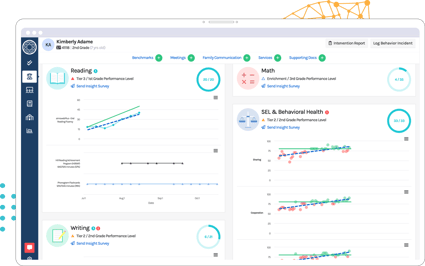
Reading, math, behavior, attendance, and safety information is spread across multiple software programs that do not communicate with each other, spreadsheets, and even hard copy folders.
- There is no unified student view, so district-wide visibility is limited for needs and outcomes at the campus and student level until it is too late to respond.
What Happens When Large Districts Work from a Single Source of Truth?
Districts can make incredible progress when administrators, teachers, and interventionists all work from the same set of information. When teams can easily access real-time student data across campuses, they can collaborate more effectively, respond earlier, and create more consistent support systems for students.
The impact goes far beyond reporting and compliance (although it makes those things much easier!). It changes how district leaders identify needs and allocate resources, including their own time.
Chicago Public Schools, Illinois: Scaling Consistent Support Across a Large, Complex District
-
See Chicago Public Schools' full success story here.
For large districts, one of the biggest challenges is making sure MTSS does not become another disconnected initiative happening in isolated pockets. Chicago Public Schools made the move from fragmented, compliance-driven intervention efforts to an approach that brings together strong infrastructure and research-based practices, such as high-dosage tutoring.
What stands out most about their story is how intentionally they approached systems change:
-
CPS created a shared vision for supporting students across SEL needs, multilingual learners, special education, and career readiness.
-
They started with a 60-school pilot of their MTSS platform to build buy-in, strengthen implementation, and create a scalable foundation for long-term success.
-
They shifted from inconsistent referral practices to universal screening for student needs, with consistent tiering for support.
- They focused on sustainable practices that campus-based staff could realistically implement day to day.
.png?width=2080&height=1170&name=CPS(thumbnail).png)
Springs Charter Schools, California: Making “Know Every Student” a Reality with Integrated Data.
-
See Springs Charter Schools full success story here.
Springs Charter Schools is committed to providing personalized support for every child, but that mission was hard to accomplish when student information was disconnected across campuses and departments. In one year, they created a coordinated data system across their network, improved their intervention practices, and improved their results.
Here’s how:
- They centralized academic, behavioral, attendance, and social-emotional data into one shared system.
- They integrated behavioral threat assessment and suicide risk assessment into that support system, in a confidential module.
- They improved collaboration practices between counselors, school psychologists, special education teams, and classroom teachers
- They launched an Early Warning System to flag student needs in attendance, behavior, and course performance.
The results were immediate:
- They reduced overall suspensions by 35.5% from the previous year
- Despite enrollment growth, they decreased Tier 3 math referrals by 3% and Tier 3 ELA referrals by 2%
- And, every student subgroup demonstrated measurable growth in reading and math.
.png?width=1280&height=720&name=Springs%20Charter%20Success%20Story(thumbnail).png)
The experience of Springs Charter Schools reinforces an important theme: when you can finally get a full picture of student needs in one place, you can respond earlier, make better decisions, and get the improvement you planned for.
Beaumont ISD, Texas: Connecting Supports for Students with the Greatest Needs
-
See Beaumont ISD’s full success story here.
Student mobility can quickly expose gaps in a district system, especially when campuses, programs, and support teams are all working from disconnected information. Beaumont ISD recognized the gap and worked to consolidate student support data, improve collaboration across departments, and create more seamless support for students moving between campuses and alternative settings, including their disciplinary alternative education program (DAEP):
- They brought assessment data, intervention plans and progress, and student services information into a single platform.
- They ensured student support plans followed students as they transitioned between campuses or from the home campus to DAEP and back.
- They strengthened cross-department collaboration by bringing multiple teams into shared conversations around student needs.
.png?width=2080&height=1170&name=Beaumont(Thumbnail).png)
Beaumont’s story is a strong reminder that districts often already have the people, expertise, and interventions they need. The challenge is creating the infrastructure that allows those supports to work together effectively.
Duneland School Corporation, Indiana: From “Islands” to a Unified District Approach
-
See Duneland School Corporation’s full success story here.
One of the biggest barriers to effective MTSS implementation is inconsistency across schools. Duneland School Corporation described itself as the “Islands of Duneland,” where each school had its own systems and practices for supporting students. Duneland successfully built a more connected approach to student support.
What stands out most about their story is how they made their data easily accessible and visible across the district:
- They standardized data collection, analysis, and intervention practices.
- They used districtwide reports to compare trends across classrooms, grade levels, and campuses
- They improved communication and decision-making between educators, interventionists, instructional coaches, and administrators.
.png?width=2080&height=1170&name=Duneland%20(thumbnail).png)
They also used reports to inform parents and community members about student supports and programs.
For district leaders, Duneland highlights the importance of creating systems that not only improve visibility into student needs, but also help schools learn from one another, scale successful practices across the district, and build bridges with the community they serve.
What a Connected Data System Makes Possible for Administrators in Large Districts
Working from a single source of truth changes how you lead:
- You have immediate access to the insights you and team need to make strategic decisions.
- You can see exactly where your budget and initiatives are making a difference.
- You can walk into a cabinet or board meeting with clear data that shows what is working, what isn’t, and what your team needs to take the next step.
If you are ready to eliminate silos and create a truly data-driven culture across your district, it is time to look at how your data is collected, organized, and made accessible to teams. Centralizing your academic, behavior, attendance, and student safety data is an investment in the success of your district.
We would love to show you what your team could do with a single source for student support and system insights. Explore how a single source for student support and system insights can help districts strengthen outcomes at scale.
-1.png?width=1000&height=281&name=District%20Leadership%20Platform%20CTA%20Banner%20(2)-1.png)

.png?width=1580&height=1050&name=Leadership-dashboard(new).png)
Great Leadership Isn’t Oversight, It’s Insight
Turn MTSS data into action. Spot trends early, track student outcomes across schools, and prepare confidently for board meetings with real-time, system-wide insights.

.png?width=716&height=522&name=Behavior%20Progress%20Monitoring%20(Preview).png)
.png?width=716&height=522&name=Restorative%20Practices%20(preview).png)
-1.png?width=716&height=522&name=Washingtons%20RTI%20Requirement%20for%20SLD%20Eligibility(preview)-1.png)