






























.png?width=444&height=266&name=Student-support%20(1).png)



.png?width=318&height=279&name=Plainview(thumb).png)




.png?width=318&height=279&name=Teams%20Edweb%20(6).png)

%20(3).png?width=318&height=279&name=Mitch-CEO(preview)%20(3).png)





From my first teaching job almost 30 years ago to the present, I’ve seen it all when it comes to discipline incident reporting. I've had lengthy paper forms in triplicate, slick mobile apps, and everything in between - with many of these changes in documentation driven by ever-increasing state requirements.
For teachers who are managing challenging behavior in the classroom, writing up a detailed discipline referral sometimes feels like a time-consuming chore with no guarantee of meaningful follow-up or consequences. But what if we intentionally set up behavior documentation not just to meet requirements or as a “gotcha” for misbehaving students, but as a powerful tool for change?
The Current State of Documentation
Many teachers feel overwhelmed by the sheer volume of paperwork they are required to complete. It's not uncommon for educators to express frustration about the time spent on discipline referrals. The documentation often feels like a "paper trail to nowhere," and it’s easy to see why teachers might question its value.
Of course we want behavior incidents to be documented correctly and for appropriate consequences and communication to be in place, but the real potential of behavior documentation lies in its ability to help us shape interventions and prevent misbehavior in the first place. High-quality documentation allows us to connect the dots between behavior incidents and the interventions needed to address them. It helps us understand behavior patterns and identify underlying needs that may be influencing student actions.
Utilizing Data for Positive Behavior Management
Often, traditional behavior documentation focuses heavily on compliance with requirements rather than on changing outcomes. Even though many schools collect reams of behavioral data, they might lack the technology tools to effectively access the data they’ve gathered and use it to inform their decisions. I’ve experienced this myself, with piles of printouts that required hand counting, or shiny new systems that promised access to discipline data but were inaccurate or couldn’t run the reports we needed. This disconnect can lead to a cycle of documentation that lists what consequences were administered but provides no insight into how to prevent incidents in the future.
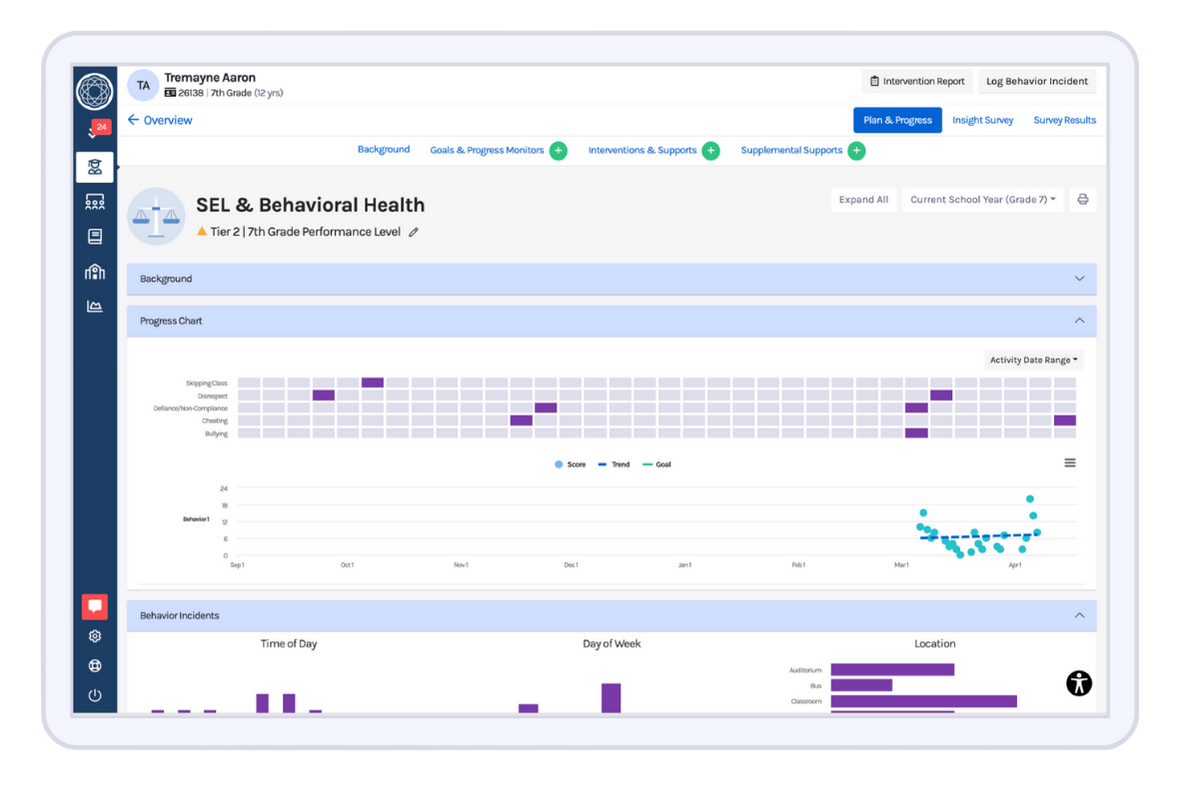
To truly benefit from behavior documentation, educators need tools that allow them to pull all that data together and see it in a way that facilitates meaningful classroom behavioral interventions. By analyzing patterns—such as when and where incidents occur, and what triggers them—we can start to understand the behavior, and even predict when it is likely to occur. This understanding can then guide us to implement interventions and consequences that are much more likely to result in positive behavioral changes.
.png?width=1125&height=563&name=The%20Tier%202%20Behavior%20Intervention%20Guide%20(preview).png)
Behavior Documentation Example
An example of good behavior data visualization might show a pattern of misbehavior with a group of students in a particular place or time of day. That pattern tells us where to dig for more information and uncover why the misbehavior might be occurring, along with proactive steps that can mitigate the problem. I’ve seen this time and again- easy access to behavioral data provides insight that leads to real change.
An accurate picture of behavior creates a sense of urgency and helps target limited time and resources where they will make the most difference. It might be that classroom management support is needed for a grade level with several new teachers, or additional structure and supervision is needed in a particular area of the school, or district-supported tiered intervention programs are needed for students with disruptive or dangerous behavior.
.png?width=2318&height=1435&name=Macbook_BehaviorIncidentReportDashboard%20(1).png)
Behavioral and Academic Data
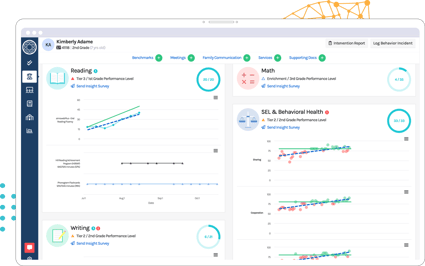
On an individual student level, behavioral and academic data seen together can help teachers create a more holistic and realistic plan. For example, if documentation reveals that a student frequently acts out during math class, and the student is also failing math benchmarks, there is a need for academic support rather than just disciplinary action. (Side note - good documentation can also inform more effective consequences!) In this example, the student may have been punished with consequences that allow him to repeatedly avoid math class and math work, making the behavior more likely to occur again.
Providing Clarity and Resources For Teachers
For behavior documentation to be truly effective, it's crucial to provide clear communication about the levels of behavior that require documentation. Schools should have guidelines on what constitutes a behavior incident and how it should be documented. Teachers need to know that their efforts will lead to positive outcomes, and that the system supports them in managing behavior.
Related Resource: Tier 1 Guide to Behavior
Teachers deserve easy-to-use tools for documentation, ensuring the process is quick and efficient. When teachers have access to user-friendly systems, they can focus more on teaching and less on paperwork. Whatever you do, don’t make teachers document the same thing twice!

Furthermore, providing teachers with workable options for behavior interventions can empower them to manage behavior effectively within their classrooms. Knowing what resources are available and how to access them builds confidence and helps educators feel supported.

Bridging the Gap Between Student Behavioral Documentation and Action
To change the way and the reason we document behavior for students, we must bridge the gap between data collection and actionable insights:
- Frame documentation as a powerful tool for change. Behavior documentation done well provides valuable information for decision-making.
- Make it easy to document with thoughtful, well-designed systems. Tools like Branching Minds make the documentation process quick and actionable, freeing teachers to focus on their students.
- Use visual data to reveal patterns and decide where further information or action is needed.
- Share discipline outcomes with faculty to highlight the impact of behavior supports.
- Involve teachers in planning and feedback about what interventions and consequences are effective, creating a school culture that values open communication and collaborative problem-solving.
Bridging Documentation to Action
Behavior documentation will always be a bit of a chore, but when done thoughtfully and with the right tools, educators will quickly see the value of their efforts to provide accurate documentation, with better behavioral supports for individual students and for their school as a whole.

Behavior Interventions Are Easier to Manage With the Right MTSS Platform
See how districts organize interventions, monitor progress, document supports, and identify behavior trends in one place.

-1.png?width=716&height=522&name=Washingtons%20RTI%20Requirement%20for%20SLD%20Eligibility(preview)-1.png)
.png?width=716&height=522&name=What%20If%20Behavior%20Is%20the%20Key%20to%20Academic%20Success%20Mini%20Summit%20Recap%20(preview).png)
.png?width=716&height=522&name=How%20Illinois%20Districts%20Can%20Fund%20RTI%20MTSS%20Infrastructure%20(preview).png)