






























MTSS and Special Education for District Leaders
Understand how MTSS and Special Education work together, when students should be referred for evaluation, and how schools can create a more connected support system.

MTSS & Special Education:
Stronger Together
MTSS and Special Education are often discussed as separate systems.
In practice, they are most effective when they work together.
A strong MTSS framework helps schools identify student needs earlier, strengthen Special Education referral and evaluation decisions, and ensure students receive the right support at the right time. Whether you're implementing MTSS, refining your Special Education processes, or improving collaboration across departments, the resources below will help you better understand the connection between the two.
On this page you'll find:
- Our comprehensive guide to MTSS and Special Education
- Answers to common questions about referrals and eligibility
- Videos, webinars, articles, and podcasts from experienced practitioners
- Real district examples of successful implementation
- Practical tools to strengthen collaboration and decision-making
Access the MTSS & Special Education Guide
Learn how MTSS and Special Education work together to create one connected system of support.

What Is the Difference Between MTSS and Special Education?
MTSS and Special Education serve different purposes, but they are designed to work together.
MTSS
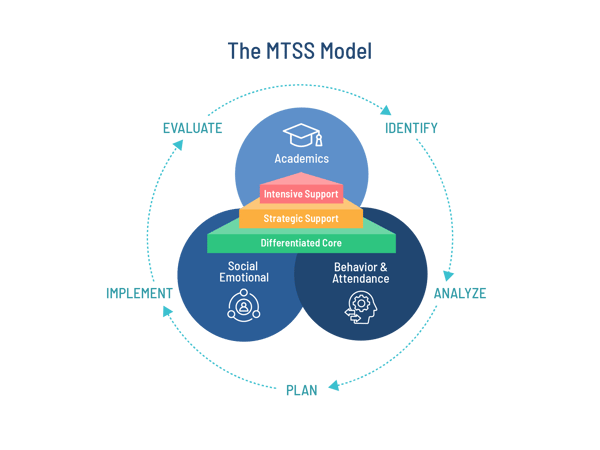
MTSS is a framework for identifying student needs early and providing increasingly targeted academic, behavioral, attendance, and social support based on data.

Special Education
Special Education provides specialized instruction and related services for students with disabilities who meet eligibility requirements under IDEA.
Build Stronger Connections Between MTSS and Special Education
A strong MTSS framework helps teams:
-
Identify student needs earlier
-
Make more informed referral decisions
-
Provide appropriate support before, during, and after Special Education eligibility is considered
Explore the resources below to learn how MTSS and Special Education work together and what district leaders can do to strengthen alignment.
⬇️ Watch this short video to learn the #1 misconception school teams have about MTSS and Special Education. Then explore the resources below for practical guidance on strengthening alignment, improving referral decisions, and building a more connected student support system.
🤝 A well-functioning MTSS framework is one of the best things you can do for your Special Education program.
Featured Resources
Guide
MTSS & Special Education: A Guide for District and School Leaders
Designed for district and school leaders, this guide explores how stronger connections between MTSS, RTI, and Special Education can imp...
Download guide
Featured Podcast

How MTSS and Special Education Work Together
MTSS creates a schoolwide structure where all students — general education and Special Education — receive high-quality instruction in the classroom.
Two-thirds of students identified with disabilities spend most of their school day in the general education classroom. It could be argued that students with learning and behavior challenges benefit the most from classrooms where clear expectations, explicit instruction, early intervention, and positive reinforcement are the rule.
If you're new to MTSS or need a refresher, start with our MTSS FAQs: Your Simple Questions About Multi-Tiered Systems of Support, Answered.
Research shows that strong MTSS implementation leads to:- Better academic performance
- Fewer behavior challenges
- A reduction in inappropriate SPED referrals
- Improved graduation rates
🏫 Why This Matters: Two-thirds of students identified with disabilities spend most of their school day in the general education classroom.
Featured Blog
10 Red Flags That Reveal a Wall Between MTSS and Special Education
Strong MTSS and special education systems require ongoing attention. Here are 10 red flags that may signal your systems are becoming disconnected.
Read the blogHow MTSS Supports the Special Education Referral and Evaluation Process
MTSS helps answer an essential question: Does this student have a disability, or have they simply never received adequate instruction and intervention?
Across the country, many states now require or strongly encourage MTSS as the model for identifying students with specific learning disabilities. These states rely on MTSS because the framework provides the data needed for referral decisions:
Clear evidence of differentiated Tier 1 instruction

Tier 2 and Tier 3 intervention plans implemented with fidelity
Ongoing progress monitoring
This information ensures students are not unnecessarily referred to Special Education when what they truly need is targeted support within general education. And, when Special Education services are warranted, MTSS intervention history provides a rich source of data to help the IEP team with planning.
MTSS Mythbuster
Myth: Schools must complete every MTSS tier before referring a student for a Special Education evaluation.
Reality: MTSS/RTI should never delay or deny a Special Education evaluation. Parents can request an evaluation at any time. Instead, MTSS provides instruction, intervention, and progress-monitoring data that help teams make more informed eligibility decisions while ensuring students receive support as early as possible.
⬆️ Watch to learn which MTSS documentation matters most for Special Education referrals, how intervention and progress-monitoring data support eligibility decisions, and the role RTI and Special Education eligibility play in helping teams distinguish between a skill gap and a disability.
Featured Podcast

MTSS and SPED Mythbuster
Myth: MTSS is primarily a process for referring students to Special Education.
Reality: MTSS is designed to identify and address student needs early through instruction and intervention. Many students successfully close skill gaps through MTSS supports and never require Special Education services.
FAQs about MTSS and Special Education
No. MTSS is not intended to delay or deny a Special Education evaluation. Parents have the right to request an evaluation at any time. Instead, MTSS provides the instruction, intervention, and progress-monitoring data that help teams make informed referral and eligibility decisions while ensuring students receive support as early as possible.
The data gathered through MTSS helps teams determine whether a student's challenges reflect a skill gap that can be addressed through targeted intervention or a disability requiring specialized instruction. Documentation of high-quality Tier 1 instruction, intervention fidelity, and progress monitoring provides important evidence during the eligibility process.
Yes. Students receiving Special Education services remain active participants in the MTSS framework. Most students with disabilities spend much of their day in the general education classroom and continue to benefit from strong core instruction, targeted interventions, progress monitoring, and coordinated support across teams.
Strong documentation includes evidence of differentiated Tier 1 instruction, documented Tier 2 and Tier 3 interventions, progress-monitoring data, intervention fidelity, and team problem-solving. Together, these records help teams understand how the student responded to support before making referral decisions.
School psychologists contribute far more than formal evaluations for Special Education services. Effective MTSS systems involve school psychologists and other specialists early in the problem-solving process, where they help analyze data, strengthen core instruction and intervention plans, and support teams before a referral is considered.
MTSS Mythbuster
Myth: Once a student qualifies for Special Education, MTSS no longer applies.
Reality: Students receiving Special Education services remain active participants in the MTSS framework. In fact, most students with disabilities spend the majority of their school day in the general education classroom, where they benefit from the same high-quality instruction, positive learning environment, and clear behavioral expectations as their peers.
See How Districts Align MTSS and Special Education
Strong alignment between MTSS and Special Education doesn't happen by accident.
Explore how districts are putting these principles into practice through webinars, success stories, and expert insights that demonstrate what connected student support looks like in action.
MTSS & Special Education Webinar
Learn practical strategies for connecting MTSS and Special Education, improving referral decisions, and building a more aligned student support system.
Watch nowConnecting MTSS and Special Education in Practice

"Once we could see the whole child in one place, we could finally identify what students really needed."
Products / Features Used
Strengthen Alignment Between MTSS and Special Education with Branching Minds
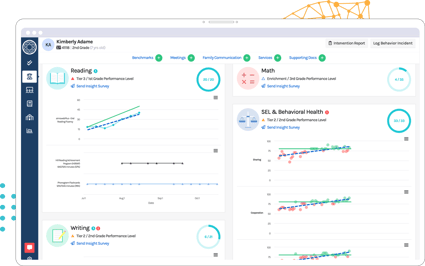
Branching Minds helps districts centralize intervention planning, progress monitoring, fidelity documentation, and multidisciplinary collaboration so MTSS and Special Education teams can work from the same student story and make more informed referral and support decisions.
Independent research from Hobson & Company found that districts implementing Branching Minds reported a reduction in "Did Not Qualify" (DNQ) Special Education referrals.

Location
Waverly School District, NE
Today, nearly 100% qualify.
Prior to Branching Minds, we recommended students for evaluation when we knew something was wrong but didn’t know what to do. Many weren’t qualifying. Today, nearly 100% qualify.
Angela Plugge
Director of Learning
See what Branching Minds can do for your district! Align your MTSS and Special Education teams around shared data and documentation, so everyone is working from the same student story.