


































.png?width=444&height=266&name=Student-support%20(1).png)




.png?width=318&height=279&name=Evanston(tile).png)



.png?width=318&height=279&name=Teams%20Edweb%20(6).png)
.png?width=318&height=279&name=Best_Small_Workplaces-2026(no-text).png)



%20(1).png?width=1436&height=956&name=Why%20Students%20Fall%20Behind%20in%20Math%20(icon)%20(1).png)
In the fall of 2021, math teacher Kristen Smith returned to the classroom after 18 months of virtual teaching to ninth graders who had resigned themselves to not being able to learn math. Many of them hadn't been able to attend virtual school consistently, and the gaps in their understanding of middle school standards were obvious right away. She was struck by how many students blamed themselves for those gaps. "It was really hard to hear students talking about themselves like that, and really taking the blame on themselves almost, for a situation that was really outside of everyone's control," she shared on a recent episode of Branching Minds Schoolin' Around podcast.

Kristen is a longtime secondary math teacher, instructional coach, and curriculum leader in urban districts and charter schools, and the author of Cultivating Math Confidence: Teaching Strategies to Boost Proficiency in Grades 6–12.
Throughout her career, she noticed that students tell themselves a narrative about their abilities, creating a fixed mindset that research says is especially problematic in math and that keeps students from feeling success. In our efforts to help students, we may see this as a social-emotional issue, but it is also a practical one.
Why a Growth Mindset Campaign Isn't Enough
Carol Dweck's work on growth mindset has led to countless campaigns built to help students change their mindset around their own learning. However, a fixed mindset is not something we change with posters and assemblies. Change comes through experience. A review of fifteen years of mindset research in high school mathematics points to two things that help build math confidence:
#1 Teacher intentionality around mindset, and
#2 Students having successful mathematical learning experiences.
So the question becomes a practical one. What produces a successful math learning experience? It starts with whether the student can get into the task at all.
.png?width=1280&height=720&name=Why%20We%20Teach%20Math%20(1).png)
Curriculum Assumes Mastery
Every curriculum, math or not, has built-in assumptions about the skills of students and what came before it. An introduction to quadratic functions unit might assume students have mastered linear functions and function notation, and can plot points on a graph.
The reality in many math classrooms is that students don't have those prerequisite skills.
Kristen points to her own state's data, where fewer than half of students have demonstrated mastery on prior-grade standards. In 2024, 41 percent of Washington eighth graders scored below NAEP Basic in math, and the share reaching Basic or above has slipped from 72 percent in 2003 to 59 percent. And Washington isn't an outlier. Nationally, just 27 percent of eighth graders reached NAEP Proficient, and by twelfth grade, 45 percent of students scored below NAEP Basic — the largest share ever reported.
When foundational skills aren't automatic, students have to hold and work out more of a problem in working memory instead of retrieving what they already know. Students end up working much harder for the same result, and that extra effort often leads to discouragement, or to the belief that they aren't good at math.
What To Do When Your Math Curriculum Assumes Skills That Your Students Don’t Have
Kristen uses Illustrative Mathematics in her classroom, and she defends it. She can watch students work a task and see exactly how the authors designed that problem to illuminate something important about math. This understanding is important because if you pull a task out, you may pull out the conceptual understanding it was built to produce.
But there's still the issue of how to support students who don't have the prerequisite skills for a specific lesson. Fidelity requires the teacher to protect the conceptual through-line the curriculum authors built, while adding an on-ramp into the lesson.
Here are three examples of effective instructional on-ramps teachers can use to build student confidence.
1. Pre-Assess and Reteach Where Needed
Assessment results don't always get specific enough about which skills students have mastered. When a lesson depends on a skill students may not remember from previous years, pre-assess before going further.
- Determine whether reteaching is required for some or all of the group based on pre-assessment results.
- Provide a quick review of key skills before introducing complex tasks.
For example, if there is a task that assumes students already know how to plot integers on a number line, start with a question in bellwork that assesses what they know. Give students sufficient footing so challenging work becomes productive struggle rather than frustration.
2. Build Moments for Students to Experience Success
It is crucial that students build momentum and confidence from the first moments in the math classroom. A good way to think about it is to ask the question, "Are students having experiences in class that let them feel success?"
Some of it comes from repeated experiences with the skills they already have. There are two ways to do this.
- The Do-Now: Questions asked in a format students have practiced and are likely to get right, drawn from previous lessons. This is retrieval practice students can complete, activating prior knowledge.
- The post-lesson example: When asking students to complete a task independently, shape the problems like the examples given in their notes. This gives the sense that the notes they take in class pay off.
Note the difference between this and the first on-ramp. Bellwork used as a pre-assessment probes what might be shaky. The Do-Now creates space for students to use or access what they already know.
These small successes carry a lot of weight for students. As Kristen put it, "These are micro moments where students kind of decide: am I learning in this class? Is what the teacher puts in front of me helping me to be able to do the math?"
Students who have a fixed mindset about their math abilities often try to hide their weaknesses. They stop asking questions or participating in class (Lane, 2024). These repeated moments interrupt that pattern.
➡️ Check out Kristen’s Substack Post about Remembered Success and access this resource about the first 10 minutes of class.
3. Practice Saying Math Words Out Loud
Letting students opt out of speaking in class, especially when it comes to math vocabulary, can also hinder growth. It is essential for students to be familiar with terms, to say them out loud, and to get comfortable using them.
Give Students Evidence That They Can Do Math
When Kristen filled in some of those missing math skills with explicit instruction, students began to shift their mindset. They could get better, and they could do grade-level math.
What helped these math students was new evidence about what they were capable of, from a teacher that was intentional about scaffolding up bit by bit.
.png?width=1000&height=500&name=The%20MTSS%20Intervention%20Guide%20(preview).png)
What School Leaders Should Know
When learning gaps show up, leaders often question the curriculum, the delivery, or how closely teachers are following the program. Often the answer sits closer to the work of the teachers, whether teachers are adjusting to the needs of students in front of them. Probing prior knowledge, writing review questions, adjusting pacing: none of that is in the teacher's edition - especially pacing.A class that needs reteaching will not move through four units in a quarter, and a pacing guide that doesn’t account for that variability often gets ignored, leaving teachers to make the adjustment on their own instead of with support.
Most likely, teachers are already doing this work. What they need is time to show each other how, through PLCs or professional development. Creating that time and protecting it is the most useful thing a leader can do. That is often where the magic happens.
.png?width=1080&height=1080&name=Secondary%20Math%20Walkthrough%20(1).png)
Related Resources:
-
Math Walk Checklist: Quality Tier 1 Instruction — A classroom observation checklist covering five core areas of Tier 1 math instruction, so leaders can spot strengths and trends during math walks.
-
Addressing the Top Four Challenges in Secondary Math Intervention — Practical, research-based strategies for common secondary math intervention challenges, including staffing, scheduling, and support gaps.
Building Math Confidence Starts With Access, Not Mindset
When a student tells you they're not a math person, treat that as information about access to instruction, not about the student themselves. Helping students believe in their own ability to learn by providing meaningful opportunities for success might be one of the most important lessons a teacher of any subject can provide.
Learn more about growing student confidence in math from Kristen's book, Cultivating Math Confidence: Teaching Strategies to Boost Proficiency in Grades 6-12 and hear her full conversation on Schoolin’ Around.
Sources
- Lane, R. (2024). It's Not Forever: Moving Math Students from a Fixed to a Growth Mindset. MAA Math Values. https://maa.org/math-values/its-not-forever-moving-math-students-from-a-fixed-to-a-growth-mindset/
- Stohlmann, M., & Yang, Y. (2024). Growth mindset in high school mathematics: A review of the literature since 2007. Journal of Pedagogical Research, 8(2), 357–370. https://www.ijopr.com/article/growth-mindset-in-high-school-mathematics-a-review-of-the-literature-since-2007-14445
- Ashcraft, M. H., & Krause, J. A. (2007). Working memory, math performance, and math anxiety. Psychonomic Bulletin & Review, 14(2), 243–248. https://doi.org/10.3758/BF03194059
- Pasquale, M. (2016). Productive Struggle in Mathematics. Interactive STEM Research + Practice Brief. Education Development Center. https://eric.ed.gov/?id=ED571660
- National Center for Education Statistics. (2025). 2024 NAEP Mathematics Assessment: Grade 12 Results for the Nation. The Nation's Report Card. https://www.nationsreportcard.gov/reports/mathematics/2024/g12/national-trends/
- National Center for Education Statistics. (2025). 2024 Mathematics State Snapshot Report: Washington, Grade 8, Public Schools. https://ospi.k12.wa.us/sites/default/files/2025-01/naep-snapshot_mat_2024_wa_8.pdf

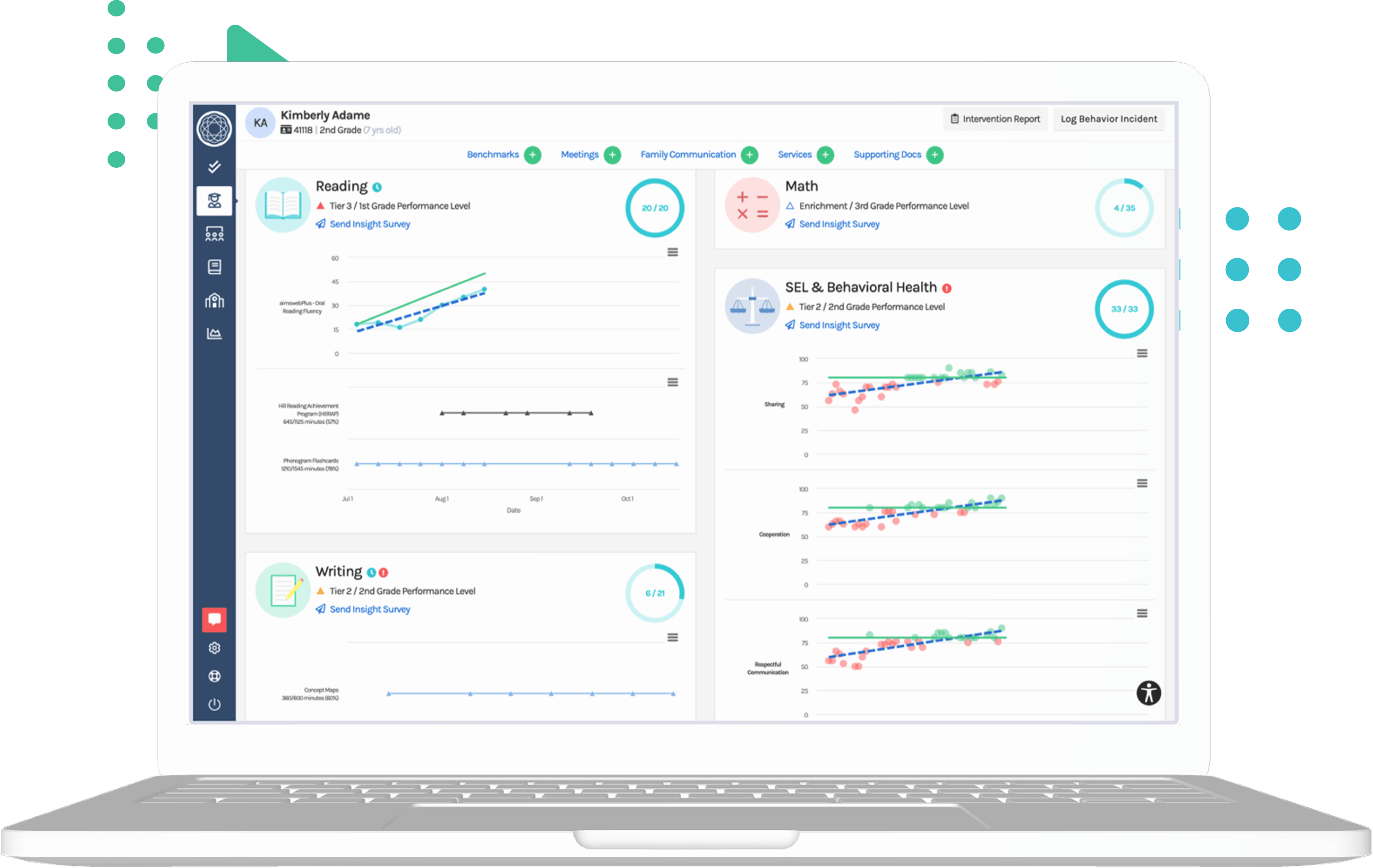
Your MTSS Partner for Math Success
Strengthen math support with targeted interventions, collaborative tools, and clear MTSS reporting.

%20(1).png?width=716&height=522&name=Mineola%20School%20District%E2%80%99s%2010-Year%20MTSS%20Journey%20(Preview)%20(1).png)

%20(1).png?width=716&height=522&name=Book%20Giveaway%20Win%20a%20Bundle%20for%20your%20MTSS%20Team%20(blog)%20(1).png)