































Math Instruction and Intervention
The Science of Reading reshaped how we approach literacy. The Science of Math is now catching up, backed by its own growing research base and a wave of state legislation.
Math Instruction and Intervention:
What District Leaders Need to Know
Numeracy can no longer take a back seat to literacy. Learn what's changing, what the research says, and what district leaders need to put in place.
On this page you'll find:
- The state legislation reshaping math instruction and intervention requirements
- What strong Tier 1 math instruction looks like
- What the Science of Math says about how students learn
- Evidence-based intervention strategies for elementary and secondary students
- How to build real math fluency, not just fact recall
- Answers to common questions about math and MTSS
- Real district results
The MTSS Intervention Guide
Find 3 evidence-based math strategies alongside interventions for literacy, behavior, SEL, and attendance, all in one place.
Download MTSS Intervention GuideMath Instruction Is at a Turning Point
🔢 Eighth-grade math scores still haven't recovered from pandemic-era declines, and high school scores have continued to slide, with more seniors performing below the basic level in math than at any point in recent memory.
A wave of new legislation is requiring earlier math screening, evidence-based instruction, and formal MTSS frameworks for intervention.
Research-backed math instruction has to be built into the core, along with screening, intervention, and progress monitoring.
Math Legislation Is Reshaping District Requirements
Mississippi — SB 2294, the "Mississippi Math Act"
- Establishes the Moving Mathematics in Mississippi (M3) Program: statewide math coaching, K–5 screening, algebra readiness indicators, and mandatory MTSS use for both math and reading.
- Districts must maintain individualized intervention plans, progress-monitoring data, and annual reporting, with FERPA-aligned privacy requirements.
Learn more: ExcelinEd, "How Mississippi's 2026 Legislative Session Transformed Literacy and Math Policy"
SB 1360, the "Oklahoma Math Achievement and Proficiency Act"
- Mandates universal math screening, including dyscalculia screening, in grades 2–5, and creates a new state Office of Mathematics Improvement to oversee implementation.
- MTSS is codified as the funding and intervention framework, with required data-driven progress monitoring and family engagement.
Learn more: Oklahoma State Department of Education, Math Achievement and Proficiency Act
Ohio — SB 19, “Regards academic intervention, math improvement and intervention”
- Requires districts to administer approved mathematics diagnostics and provide intervention to students who are not making satisfactory progress.
- Schools with no more than 51% of third graders proficient in mathematics must submit improvement plans using approved and listed curricula beginning in 2026–2027.
Learn more: The Fordham Institute: Ohio Lawmakers Just Passed a Sweeping Math Reform Bill
Georgia — HB 1030, the "Math Matters Act"
- Mandates the adoption of evidence-based math instruction standards, the integration of interventions in a Multi-Tiered System of Supports, and the use of student data for instructional decisions in Georgia's K–12 schools.
- Requires local education agencies to implement advanced math courses and provide instructional supports and interventions such as high-dosage tutoring, small-group instruction, and technology-enabled activities, along with robust progress monitoring and reporting.
- Revises teacher certification standards to include training in evidence-based math instruction, intervention strategies, and data-driven decision-making, and requires disaggregated student data reporting along with family communication about advanced math opportunities.
Learn more: ExcelinEd, "Georgia Passes Comprehensive K-12 Education Policies"
California — SB 1067*
- Would require K–2 schools to adopt evidence-based, developmentally appropriate math diagnostic assessments, with the State Board of Education setting approval criteria.
- Explicitly encourages MTSS as the model for intervention and progress monitoring, meaning California districts would have direct state backing for the same tiered approach many are already building, once signed.
*Not yet passed. As of this writing, the bill has cleared the Legislature and is on the Governor's desk.
Learn more: EdSource, "California bill to catch math struggles in youngest students heads to governor's desk"
Indiana — HB 1634
- Requires teacher preparation programs to align math instruction with evidence-based strategies such as conceptual understanding, procedural fluency, and real-world problem solving.
- Mandates K–2 math screeners and MTSS-based intervention that moves from less to more intensive support based on ongoing data analysis.
Learn more: ExcelinEd, "Indiana Passes Comprehensive Math Reform to Boost Early Learning and Accelerate Student Success"
Math Legislation Mythbuster
Myth: New math legislation only applies to elementary schools.
Reality: Several bills, including Georgia's Math Matters Act and Indiana's H.B. 1634, extend into secondary math course access, teacher certification, and district-wide reporting.
Branching Minds Meets the Evidence-Based Standard These Laws Require
Independent research shows Branching Minds improves math and reading outcomes.
See the announcementWhat Strong Math Instruction Looks Like

Math intervention only works when it has a strong Tier 1 foundation of core classroom instruction. Even with a growing supply of High-Quality Instructional Materials (HQIM), only 51% of math teachers report using an aligned curriculum at least weekly, according to EdReports' most recent State of the Instructional Materials Market report.
Source: https://edreports.org/resources/article/state-of-the-instructional-materials-market-2023
In addition, observational research from TNTP's Opportunity Myth study found that students spent a majority of classroom hours on below-grade-level content. It’s no wonder that intervention caseloads stay high.
Source: TNTP, "The Opportunity Myth" — https://tntp.org/publication/the-opportunity-myth/
Strong Tier 1 Math Instruction Includes:
High-quality, standards-aligned curricular materials, used with fidelity

Regular "math walks" to confirm rigor and alignment match what was adopted, not just what's convenient

A shared, schoolwide understanding of what evidence-based math instruction looks like in practice
Featured Downloadables
Math Curriculum Selection & Implementation Rubric
Use this resource to help your team work through a teacher-centered process for selecting and implementing high-quality math curriculum.
Download the rubric
Math Walk Checklist: Quality Tier 1 Instruction
A classroom observation checklist covering five core areas of Tier 1 math instruction, so leaders can spot strengths and trends during math walks.
Download the math checklist
Tier 1 Math Walk Rubric: Learning Walk Reflection Tool
Learning walks are intended to celebrate strengths, identify trends, and support professional growth
Download the math walk rubricThe Science of Math: What Research Says About How Students Learn
Like literacy, numeracy has its own growing research base. The starting premise of this math research is that access to learning math is a basic educational right, and most U.S. students currently don't meet minimum proficiency levels.
Learn More: The Science of Math is a research clearinghouse maintained by researchers and practitioners in math education and school psychology, focused on using objective evidence about how students learn math to guide instruction and policy.
⬆️ Watch this short video to learn why explicit instruction is one of the most misunderstood strategies in math education. This clip is from Amanda VanDerHeyden's keynote at the MTSS Summit, Lessons Learned in 15 Years of MTSS.
Three ideas from the Science of Math are especially relevant for MTSS teams:
- Explicit instruction has an exceptionally strong research base for students who struggle with math, and likely benefits all students. It combines clear modeling, guided and independent practice, and specific supports like frequent student responses and immediate corrective feedback.
- Universal screening in math should function the same way strong reading screening does — an early, reliable signal of who needs support, tied directly into MTSS tier placement rather than sitting in a separate system.
- Classwide math instruction has a defined set of "active ingredients":
- Guided practice with corrective feedback
- High rates of opportunity to respond
- Targeting skills a student has partially but not fully mastered
- Building in regular opportunities for a student to beat their own prior performance
Most K-12 math curricula are not designed around these principles, which is a core reason why widely adopted math programs are often not associated with real gains in student achievement. A strong math screening and intervention system can't fully compensate for a curriculum that isn't built on solid instructional design.
Find an Effective Math Instruction Scoring Rubric and more resources at The Science of Math.
Math Instruction Mythbuster
Myth: Timed tests and timed practice cause math anxiety, so they should be reduced or removed for anxious students.
Reality: No research has established that timed tests cause math anxiety. Math anxiety is more closely tied to weak skill proficiency — students with weaker skills report more anxiety, and reducing exposure to challenging, fluency-building practice tends to worsen skill development and, with it, anxiety. Well-aligned instruction that matches a student's actual skill level reduces anxiety more reliably than removing timed practice does.
Evidence-Based Math Intervention Strategies
Once Tier 1 is strong, intervention should be targeted — addressing specific skill gaps and misconceptions, not re-teaching everything a student has already learned.
High-leverage strategies include:
Explicit Instruction
Clear modeling ("I do, we do, you do"), think-alouds, and frequent checks for understanding

Manipulatives and Visual Models
Connecting procedures to conceptual understanding, especially for fractions, place value, and proportional reasoning

Flexible Grouping
Regrouping students based on current data rather than keeping them in fixed groups for a full grading period

Progress Monitoring on a Consistent Cadence
Weekly for Tier 3, every other week for Tier 2, so intervention plans can be adjusted before gaps widen
Featured Podcast
⬇️ Watch this short clip to hear why the biggest barrier in secondary math intervention often isn't a missing skill, it's a student's belief that they can't do math at all.
This clip is from a conversation between Kristen Smith, a secondary math teacher and instructional coach, on the Schoolin' Around Podcast. Watch the full episode here.
Featured Resources
Article
Math Intervention Strategies for MTSS
Discover evidence-based math intervention strategies for MTSS. Boost student success with targeted Tier 2 & Tier 3 supports and progres...
Read the article
Math Intervention Mythbuster
Myth: Struggling students need remediation — reteaching below-grade-level content until they catch up.
Reality: Research comparing over 100,000 classrooms found that students in acceleration models, which bridge prior knowledge to grade-level content, completed more grade-level lessons and faced fewer challenges than students in remediation models. Just-in-time support outperforms just-in-case support.
Building Math Fluency
"Math fluency" is often used interchangeably with "math fact fluency," but the two aren't the same thing. Fact fluency is automaticity, like quickly recalling that 5 x 7 = 35. Math fluency is broader: it includes fact fluency, but also procedural fluency and the ability to flexibly apply strategies across problems.
Weak skill proficiency is a stronger predictor of math anxiety than any single instructional method, and building automaticity through consistent, well-aligned practice is one of the most reliable ways to build the skill proficiency that keeps anxiety down.
Comprehensive fluency-building includes:
- Timed and fluency-focused practice as a regular part of instruction.
- Gradual release of responsibility when teaching new strategies, to catch misconceptions early
- Deliberate practice: short, focused, feedback-rich practice sessions paired with reflection and rest
- Instruction and practice matched to a student's actual measured skill level. A mismatch may drive math anxiety up.
- Flexible grouping based on real-time data, so practice stays targeted as students grow
Featured Resources
Math Fluency: We Need a Comprehensive Approach
A guest post from BlueStreak Math on the difference between fact fluency and true math fluency, and how to build both.
Explore math fluency strategies
Building Math Fluency Through Flexible Grouping
On-demand webinar featuring a Chicago Public Schools principal and BlueStreak Math on practical flexible grouping strategies for elementary classrooms.
Watch the math fluency webinarFAQs About Math Intervention and MTSS

Math fact fluency is automaticity — quickly and accurately recalling basic facts from memory. Math fluency is broader: it includes fact fluency, but also procedural fluency and the flexibility to apply strategies across different types of problems. Strong instruction builds both, not just one.
Remediation typically reteaches below-grade-level content in isolation from what's happening in class. Intervention, done well, is “just-in-time” support that bridges specific skill gaps while keeping students connected to grade-level instruction. Research consistently favors acceleration models over remediation models.
Learn more: TNTP, "Accelerate, Don't Remediate" (May 2021)
Strong screening looks beyond a single grade-level test. It should include number sense, basic operations and place value understanding, and screening for dyscalculia risk. Screening data should feed directly into MTSS tier placement, not sit in a separate system.
There's no universal number, but a common structure is 20–30 minutes of intervention, 3–5 times per week, combining a short fluency warm-up, focused skill instruction, guided practice, and a quick exit check. Consistency matters more than session length.
A growing number do, including Mississippi, Oklahoma, Georgia, Indiana, and California, each with different specifics around screening grades, reporting requirements, and funding structures. Check your state's current requirements, since new legislation is passing regularly.
Strong universal math screening should include dyscalculia risk indicators alongside number sense, basic operations, and place value, so students at risk aren't missed by a general screener alone. States like Oklahoma have already codified dyscalculia screening into law as part of their MTSS requirements. Once identified, students benefit from the same evidence-based practices that support all struggling math learners, explicit instruction, targeted intervention matched to specific skill gaps, and consistent progress monitoring, delivered with the intensity and frequency their level of need requires.
See How Districts Are Improving Math Outcomes
⬇️ See how districts like Community Consolidated School District 59 and Springs Charter Schools moved from fragmented math support to connected systems that drive real, measurable results.
"The systemic change had a huge impact on morale, teacher confidence, confidence in what they’re doing, our collaborative practices as a team, and how we support students."
Products / Features Used

"Once we could see the whole child in one place, we could finally identify what students really needed."
Products / Features Used
Improve Math Outcomes With Branching Minds
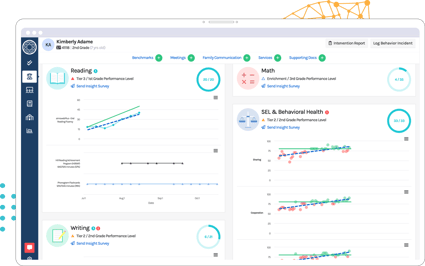
Branching Minds brings together math screening, intervention planning, progress monitoring, and reporting in one place, giving you the insight and oversight you need to drive measurable improvement.