

































.png?width=444&height=266&name=Student-support%20(1).png)




.png?width=318&height=279&name=Evanston(tile).png)



.png?width=318&height=279&name=Teams%20Edweb%20(6).png)

%20(3).png?width=318&height=279&name=Mitch-CEO(preview)%20(3).png)



.png?width=1436&height=956&name=6%20Ways%20MTSS%20Leaders%20Keep%20Buy-In%20From%20Fading%20After%20Year%20One%20(blog).png)
Picture year one of a new MTSS initiative: the rollout meeting is packed, the deck is polished, everyone nods along. Now picture year three, after two new principals, a legislative curveball, and a dozen other "priorities" that came and went. That's the moment buy-in either survives or whimpers out. In a recent Branching Minds webinar, MTSS Leadership Essentials, Laurel Dickson, Director of MTSS at Richardson ISD in Texas, walked through how she keeps MTSS alive across 50 campuses — not by being everywhere at once, but through a handful of deliberate habits. Here are six of them, straight from the conversation. Watch the full webinar recording for the rest.
1. Protect your calendar around your stated priority
It's not enough to tell your teams they're a priority, you have to show it. That means scheduling time with them, communicating your intentions, and following through. Your calendar is the evidence: it either backs up what you say matters or it doesn't. As Laurel puts it, "Your calendar really has to reflect what your priorities are, and you have to protect that time." Right now, that means Laurel is making a conscious effort to be on campuses more often, even when that requires pushing back on meetings that conflict with that goal.
💡Start small. Name one priority for the year, then check whether last week's calendar would prove it to a stranger.
2. Replace one-and-done PD with a recurring, low-lift touchpoint
A single training session rarely makes learning stick, plan for small, recurring touchpoints instead. Laurel built "MTSS Mondays": once-a-month academic sessions and once-a-month behavior sessions, each offered at two different times so staff can attend around lunch duty or a pep rally without missing a full workday. The content is just-in-time, what teams need to know that month, not a full curriculum crammed into one long sitting. It's also entirely virtual, since no one has time to travel or stay after school for it.
💡 Set the recurring time before the year starts, send the calendar invites early, and let attendance build gradually rather than expecting a full house on day one.
3. Lead your newsletter with "what should I be doing right now"
Beyond the virtual sessions, Laurel sends a monthly MTSS newsletter to campus MTSS coordinators — usually an assistant principal or instructional coach — and opens it with action items instead of updates. Too often, a team newsletter buries the useful part under fluff and status updates before it gets to the point. The goal here is a regular pulse check — quick enough to actually get read, useful enough to act on.
💡 Audit your last newsletter or update email. Are the action items up front, or buried?
Related Resource: Sign up for our The MTSS Spark for weekly, practical MTSS strategies delivered straight to your inbox, plus a free MTSS Month-by-Month Checklist when you subscribe.
4. Bring in guest expertise instead of carrying every answer yourself
No single leader can be the expert on every part of MTSS, and trying to be undercuts your credibility more than it builds it. When training staff, bring in specialists from other departments: a behavior specialist can speak directly to teams navigating behavior challenges, and the data department can walk through how they're bringing everything together. It also reinforces that MTSS isn't one isolated initiative but an interconnected system. As Laurel says, "The more people see that I'm connected with other people, the more they see — that's MTSS, that's MTSS, those things work together."
Hear Laurel break down the real reason MTSS falls apart. ⬇️
.png?width=1080&height=1920&name=Why%20MTSS%20Falls%20Apart%20(1).png)
💡 Think of one department you haven't looped in yet this year, and invite them to present to your teams.
5. Build redundancy so the system doesn't depend on you noticing everything
It gets overwhelming fast if it all runs on memory. You're building systems to support students — but you also need systems to manage your own work. Laurel keeps every campus's MTSS meetings on her calendar, without necessarily attending all of them, just to stay aware of when and where they're happening. She also keeps her own tracker of which campuses she's visited recently, so she rotates deliberately instead of always showing up wherever the loudest request comes from.
💡 Pick one thing you currently track from memory, and put it on a shared calendar or tracker instead.
6. Approach people like you're still new, even years in
Every year brings a new round of teachers, support staff, and leaders into a district, which is a natural opening to get curious about their work and priorities. But that approach isn't limited to people who are new: it works with any staff member as a way to renew the connection. Seven years into her role, Laurel still approaches colleagues with genuine curiosity rather than assuming their buy-in is already secured. "I'm not new anymore," she says, "but I still approach people and say, hey, what do you think about this? Do you want to work together on this?"
💡 This week, ask one person doing related work, "Did you know we're both working on this?" instead of assuming they already know. It might be the connection that gets two departments talking.
Consistent, Not Costly
None of these tactics require new budget or new authority, just follow-through. Buy-in holds up when you actually do what you said you'd do, prioritize what you claimed you'd prioritize, and lead with the humility to admit you're not the expert in the room. Your job isn't to have every answer, but rather to support the system that lets the actual experts do the work of supporting students.
These six habits are just part of the conversation. Watch the full MTSS Leadership Essentials webinar recording for Laurel's take on the pitfalls that derail MTSS in the first place, how she built Richardson ISD's framework from scratch, and where central office should — and shouldn't — step in.


Strengthen MTSS Across Your District
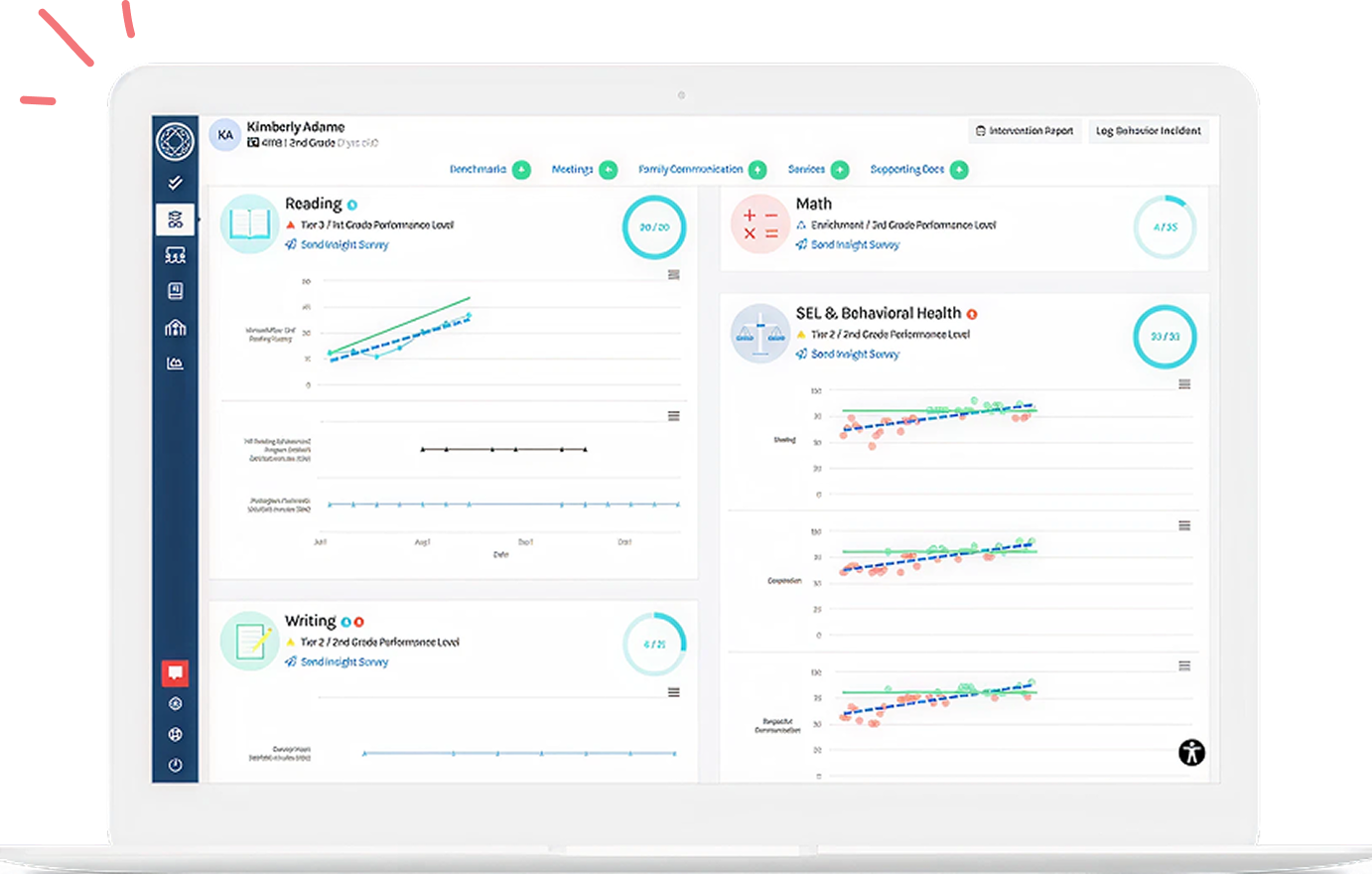
See how the Branching Minds MTSS platform helps districts organize interventions, monitor student progress, and improve implementation across every school.

%20(1).png?width=716&height=522&name=Mineola%20School%20District%E2%80%99s%2010-Year%20MTSS%20Journey%20(Preview)%20(1).png)
%20(1).png?width=716&height=522&name=Book%20Giveaway%20Win%20a%20Bundle%20for%20your%20MTSS%20Team%20(blog)%20(1).png)
.png?width=716&height=522&name=3%20Things%20School%20Safety%20Teams%20Need%20to%20Be%20Effective%20(preview).png)