






























.png?width=444&height=266&name=Student-support%20(1).png)




.png?width=318&height=279&name=Evanston(tile).png)



.png?width=318&height=279&name=Teams%20Edweb%20(6).png)





.png?width=1436&height=956&name=3%20Things%20School%20Safety%20Teams%20Need%20to%20Be%20Effective%20(preview).png)
School safety is one of the heaviest responsibilities on a district leader's plate. You want every student to feel safe, supported, and ready to learn and you want your staff to feel confident, not caught off guard, when something difficult happens. The good news? You don't have to carry that weight alone.
In a conversation on our podcast, Dr. Jess Plaza, Director of Schools Management at Evanston-Skokie School District 65 in Illinois, shared what actually makes a school safety team work. Her guidance is refreshingly practical, and it reframes safety as part of your existing Multi-Tiered System of Supports (MTSS) rather than a separate process.
🎧 Listen to the full conversation using the podcast player below. ⬇️

1. Multiple Perspectives
One of Dr. Plaza's clearest recommendations: safety teams should be multidisciplinary. No single role can see the whole picture.
In her district, effective teams typically include:
- School administrator (who serves on the team but doesn't necessarily lead it)
- Social workers and psychologists, who conduct threat and risk assessments because of their specialized mental health training
- General education and special education teachers
- Multilingual educators
- Paraprofessionals, many of whom support students with IEPs and interact with them in different contexts.
That last point matters more than you might expect.
Pulling those varied perspectives together helps your team make clearer, more informed decisions, grounded in multiple sources of information rather than a single impression.
2. Norms for Meeting and Responding
A strong team needs predictable structure, both for proactive planning and for in-the-moment response.
Here's what that looks like at School District 65:
- Meet regularly. Teams gather at least monthly, and most meet twice a month. These meetings aren't just for crises. Teams review behavior incident referrals, threat and risk assessments, SEL plans, and attendance data together to spot patterns and plan ahead.
- Rotate the daily response. Rather than letting every urgent call fall on the same one or two people, schools use a daily rotation. On Monday, one small group carries the responsibility; on Tuesday, another group steps in. This protects staff from burnout and keeps response capacity steady all week.
- Connect schools to each other. The district leader's role is consulting and connecting — noticing where a school is struggling and pointing leaders toward another building doing that work well. With 18 schools, that peer-to-peer learning is invaluable.
Related Resource: 5 Factors for District Leaders to Align Vision and Action With MTSS
This blend of proactive data review and planned response is what lets teams stay calm and targeted when the unexpected happens — because something always will.
3. Confidentiality & Consistency
One of the trickiest challenges Dr. Plaza named is balancing student confidentiality with the information staff genuinely need to support a child consistently. Not everything a student shares should be shared with everyone. But the right people do need to know enough to respond appropriately, no matter where that student goes in the building.
Getting this balance right takes intentional conversations among social workers, counselors, and administrators about what stays confidential and what can be shared more broadly. It also takes a system that protects sensitive information while still keeping teams aligned.
.png?width=2100&height=1097&name=03.25.26_WEB_26_Building_Systems_to_Support_Student_and_School_Safety(tile).png)
Where the Right System Makes a Difference
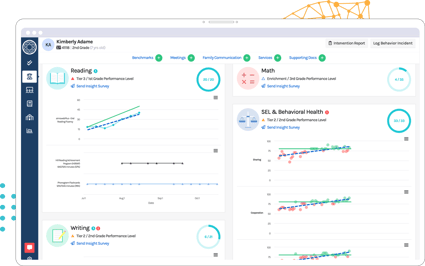
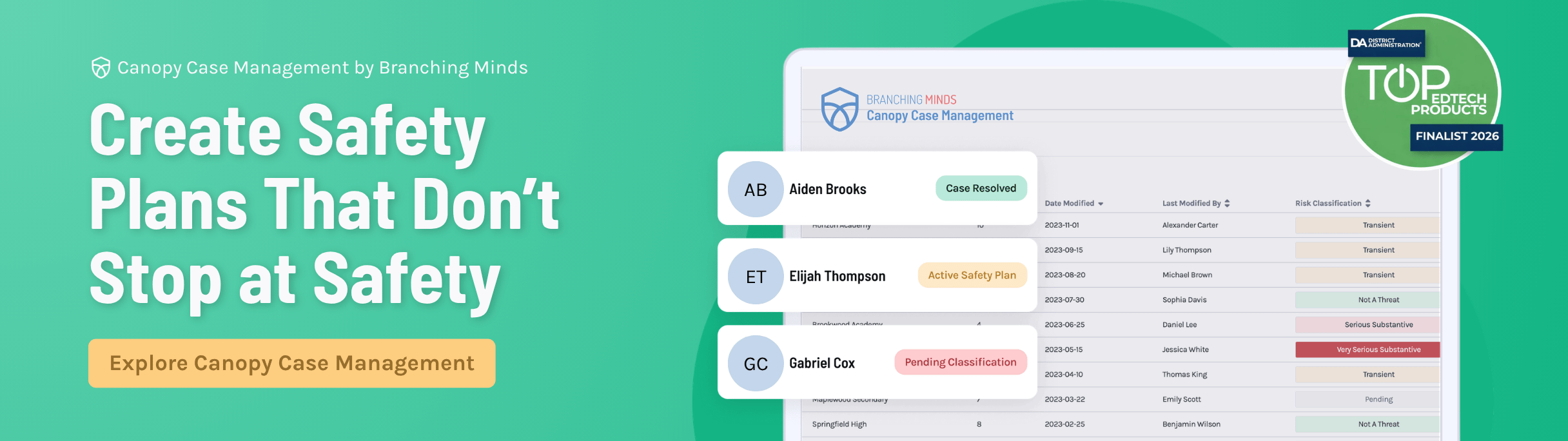
This is where having safety work live inside a tool your teams already use becomes a real advantage. Safety teams can document threat and suicide risk assessments, assign follow-up tasks, and track actions — all within the same platform they rely on for behavior referrals and MTSS plans.
Instead of jumping between five different places to do one job, her teams keep everything centralized, secure, and connected to the rest of a student's support story.
Looking for practical guidance? Download our Integrating Threat Assessment and Suicide Risk Screening into MTSS Guide to learn how districts can integrate threat assessment, suicide risk response, and MTSS into one coordinated system.
Putting These Practices Into Action
⬇️ See how Evanston-Skokie School District 65 built connected systems that help teams coordinate threat assessment, document decisions, and support students from assessment through intervention.
-1.png?width=700&height=394&name=Canopy%20Social%20Proof%20Video%20(Jess-Plaza)-1.png)
Strengthening Your School Safety Team
You don't need to overhaul everything to strengthen your safety teams. Start by reviewing who's at the table, how often they meet, and how clearly they share information. Build on the systems and data you already have.
Ready to dig deeper? Listen to our full conversation with Dr. Jess Plaza on the podcast, view our school safety resource page, and explore how Canopy Case Management can help your teams coordinate, document, and act with clarity.

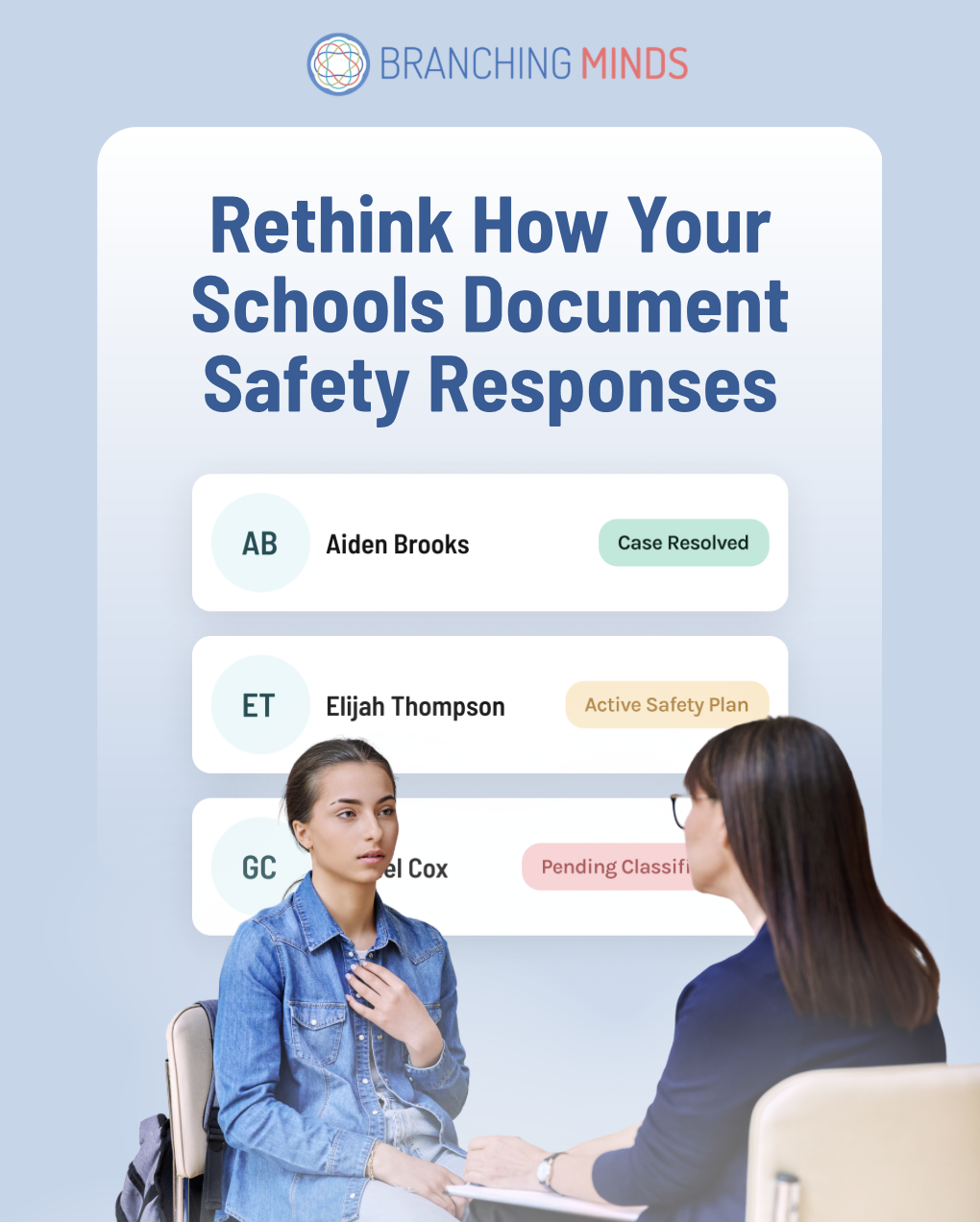
Safety Insights to Support Every Student
Bring threat assessment, suicide risk response, and student support planning together in one secure system.

%20(1).png?width=716&height=522&name=Mineola%20School%20District%E2%80%99s%2010-Year%20MTSS%20Journey%20(Preview)%20(1).png)

.png?width=716&height=522&name=6%20Ways%20MTSS%20Leaders%20Keep%20Buy-In%20From%20Fading%20After%20Year%20One%20(blog).png)