



































.png?width=444&height=266&name=Student-support%20(1).png)



.png?width=318&height=279&name=Evanston(tile).png)



.png?width=318&height=279&name=Teams%20Edweb%20(6).png)

.png?width=318&height=279&name=Best_Small_Workplaces-2026(no-text).png)




.png?width=1436&height=956&name=Funding%20in%20Texas%20(preview).png)
Recent legislative changes in Texas, including SB 991 and HB 2, have expanded both the need for student support systems and the flexibility districts have to fund them.
This guide is designed to help Texas superintendents, federal programs directors, special education leaders, MTSS coordinators, and district administrators understand where those funding opportunities exist and how they align with district priorities.
Why MTSS Funding Matters More Than Ever in Texas
Across Texas, district leaders are being asked to do more with the resources they already have, and to demonstrate that support systems are not only available, but implemented consistently and producing results.
This is where sustainable Multi-Tiered Systems of Supports (MTSS) and Response to Intervention (RTI) infrastructure become critical.
Strong MTSS infrastructure helps districts:
- Centralize and analyze data at the district, campus, and student levels
- Screen and tier students for support
- Create intervention plans
- Monitor fidelity of implementation
- Monitor student progress over time
- Document services and outcomes
The question many Texas leaders are asking is how to sustainably fund the infrastructure required to make MTSS practical at scale.
The Texas Funding Landscape for MTSS
Texas leaders often assume they need a new grant to fund MTSS infrastructure. But in most cases, the money is already there — in formula funds, federal allocations, and categorical programs that districts receive every year.
The challenge is that these funding streams are rarely positioned as MTSS funding. They are positioned as at-risk funding, school improvement funding, or professional learning funding. But when you look at what these dollars are designed to do, the alignment to MTSS infrastructure is strong.
Here is a practical overview of the primary pathways available to Texas districts.
Texas Compensatory Education (TCE)
Texas Compensatory Education remains one of the strongest and most flexible funding pathways for supporting students identified as at-risk.
The significance of HB 2 cannot be overstated. Beginning in FY 2025-26, districts are no longer required to dedicate 55% of Compensatory Education funds to direct instructional services.
This change provides additional flexibility for districts seeking to strengthen the systems and infrastructure that support at-risk students.
For district leaders, the key question becomes:
How effectively are we identifying at-risk students, coordinating interventions, monitoring progress, and documenting outcomes across all campuses?
Districts that struggle to answer that question often discover that the challenge is not staffing alone but the systems that support the work. Better infrastructure makes the work possible without overtaxing staff members.
SB 991 and Expanded At-Risk Requirements
SB 991 expanded Texas's definition of at-risk students to include chronic absenteeism and truancy indicators.
As districts operationalize these requirements, the number of students requiring identification, support, monitoring, and documentation may increase substantially.
Attendance can no longer be viewed as a separate initiative. It must be connected to intervention planning, student support processes, and district reporting systems.
District leaders should consider:
- How are attendance concerns identified?
- What supports are assigned when students meet at-risk criteria?
- How is intervention delivery documented?
- Can district leaders easily monitor implementation across schools?
These questions are becoming increasingly important as districts work to meet state expectations while supporting students before challenges become more severe.
Related Resource: Roll Call! Addressing the Roots of Absenteeism with MTSS
Title I — Part A
Title I remains the primary annual federal funding source for academic risk and school improvement for most Texas districts. The alignment to MTSS infrastructure is straightforward: Title I is designed to support evidence-based interventions, schoolwide improvement, and the systems that help districts identify students, plan supports, and monitor whether those supports are working.
When it comes to technology tools, they are part of the infrastructure that makes MTSS implementation consistent and documentable across Title I schools - connecting identification, planning, progress monitoring, and evidence of implementation in one place.
Title II — Part A
Title II-A is a natural fit when a district's investment in infrastructure includes professional learning, coaching, and implementation support.
Title II dollars are designed to strengthen educator effectiveness through data-driven instructional decision-making and job-embedded professional learning. This helps educators make the best use of the tools and resources available to them and make better decisions about student support.
Title II works best as one piece of the funding strategy, not the primary source of funding for MTSS. Lead with the professional learning and implementation support components.
Title IV — Part A
Title IV-A offers support across three areas:
- Well-Rounded Education
- Safe and Healthy Students
- Effective Use of Technology
For MTSS infrastructure, the strongest alignment is with Safe and Healthy Students and Well-Rounded Education, where behavior supports, attendance systems, school climate work, and tiered student support all have a natural home.
One important note: TEA guidance specifies that districts may not use more than 15% of Title IV-A funds for technology infrastructure. That cap does not apply to software, professional development, or program activities — but it does mean positioning matters.
School safety is a key priority for many Title IV-A initiatives. Listen to Creating Safe Schools: The Role of MTSS to learn how districts are building proactive systems that support student well-being, improve school climate, and strengthen safety efforts. ⬇️

Why Texas Leaders Should Act Now
The funding conversation for MTSS infrastructure is not a future-planning conversation. It is a right-now conversation for three reasons:
- SB 991 requirements are active. The expanded at-risk definition is already in effect, and districts are expected to identify, support, and document services for a broader population of students. The districts that have strong MTSS systems in place will navigate those requirements more smoothly than those still working from disconnected tools and manual processes.
- HB 2 opened new flexibility that districts have not yet fully used. The removal of the 55% Compensatory Education floor gives districts room to invest in MTSS infrastructure without displacing direct services — but that flexibility only helps districts that know how to use it. Many districts are still operating under the old model.
- Formula funding requires planning lead time. Formula funds like Compensatory Education and Title I require budget planning, and mid-year changes may require a budget amendment. Districts that begin the conversation now are far better positioned for the next planning cycle than those that wait.
What Gets in the Way of Funding MTSS Infrastructure
Even when the funding exists, districts run into common barriers that slow the conversation down.
-
The "no budget" default.
When district leaders say there is no budget for MTSS technology and infrastructure, the conversation often stops before it should. In many cases, the budget exists — it is just coded to other priorities, or the connection to an existing funding stream has not been made yet. The right response is to explore which federal or state streams are currently supporting student support and intervention work, and whether those dollars could be directed toward infrastructure that makes that work more effective. -
Single-source thinking.
Districts sometimes look for one funding source to carry the full cost of MTSS infrastructure. In practice, MTSS touches many departments and often draws on multiple aligned sources — Compensatory Education for at-risk identification and progress monitoring, Title I for school improvement infrastructure, Title II for professional learning, and Title IV-A for behavior and attendance systems. A blended funding approach is both common and appropriate.
- Waiting on a grant.
Competitive grant funds like the Stronger Connections Grant can support behavior, climate, and tiered support conversations — but that cohort was limited to 98 districts, and funds may already be committed. For most districts, formula funds are a more reliable and sustainable path than competitive grants.
What MTSS Infrastructure Looks Like in Practice
Funding MTSS infrastructure is not just a purchasing decision. It is a systems-level collaboration and practice decision — one that should connect to how a district identifies students, coordinates support, monitors progress, and demonstrates that its at-risk and school improvement work is producing results.
Here is what MTSS should look like across key areas.
Centralized Student Support Data
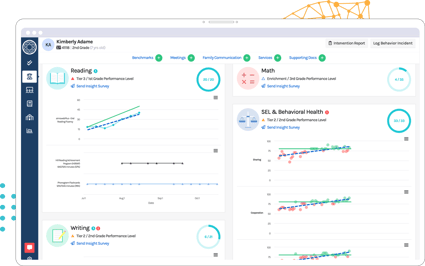
Effective MTSS infrastructure starts with having student data in one place. When academic, behavior, and attendance data live in separate systems, spreadsheets, and paper files, teams spend time finding and organizing information rather than using it.
Can our campus teams access a complete picture of a student's needs and support history without pulling from different systems?
Consistent Intervention Identification and Planning
One of the most common gaps in district MTSS systems is inconsistent screening, tiering, and intervention practices across campuses. One building may have a clear, well-documented set of intervention resources and processes. Another may rely on individual educators to determine next steps without shared protocols or tools.
Over time, those differences translate into unequal student experiences — and, under SB 991 and Title I accountability requirements, they create documentation and compliance risks.
Do our campuses use a consistent process for identifying students who need support, assigning interventions, and documenting what those students are receiving?
.png?width=2080&height=1170&name=Beaumont(Thumbnail).png)
⬆️ Success Story: How Beaumont ISD Improved Alternative School Collaboration with Branching Minds
Progress Monitoring That Drives Decisions
Progress monitoring is only valuable when it leads to action. Many districts collect significant amounts of student data but still struggle to answer the most important questions: Is the intervention working? Is the student making sufficient progress? Should support be adjusted, intensified, or faded?
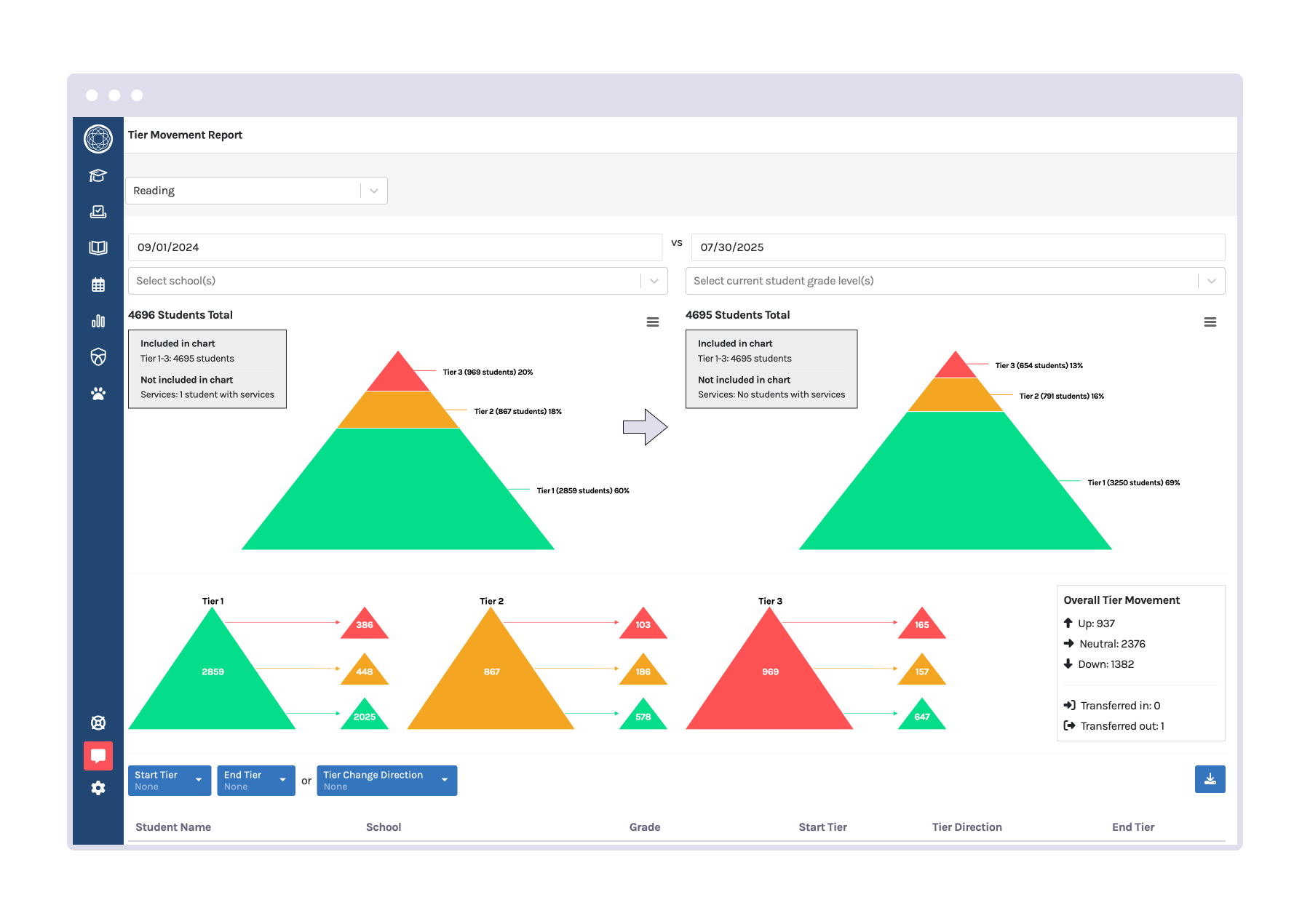
For district leaders, progress monitoring is also a visibility issue. Without aggregate reporting across schools, it is difficult to know which interventions are producing results, which campuses may need additional support, and whether patterns of need are emerging across grade levels or student groups.
Documentation That Supports Compliance and Reporting
For districts navigating at-risk requirements, Title I accountability, or special population reporting, accurate documentation is essential. The question is whether documentation is happening consistently and in a way that is retrievable when needed.
When intervention records live in disconnected tools, fidelity documentation is inconsistent, and progress monitoring data is scattered across files and spreadsheets, districts are exposed to reporting gaps that are difficult to address after the fact.
Branching Minds makes it easier for educators to document intervention delivery, record fidelity information, and connect progress data to student support plans — creating a record that supports both good decision-making and compliance readiness.
District-Level Visibility Across Campuses
District leaders need more than campus-level data. They need the ability to see patterns across buildings — where implementation is strong, where additional support is needed, and whether student outcomes are improving at a systemic level.
That visibility supports better leadership decisions, more targeted professional learning investments, and stronger conversations with boards, state agencies, and community stakeholders about what the district is doing for its most vulnerable students.
⬆️ Success Story: MTSS Success Story: How Waco ISD Streamlined Student Support Across Schools
Contextual Funding Pathways for Texas Districts
Beyond the primary funding streams, several additional sources may apply depending on a district's specific student population and priorities.
-
Special Education Allotment: May apply when the MTSS infrastructure supports IEP progress monitoring, intervention documentation, or referral-prevention workflows for students with disabilities. Districts should confirm allowability with their compliance teams, as requirements vary by local and state interpretation.
-
Dyslexia Allotment: A potential fit when the district can clearly connect the platform to progress monitoring, intervention planning, and documentation for students with dyslexia and related disorders. This is a narrower source and requires a clearly articulated use case.
-
Early Literacy Intervention Allotment: May apply as the management and progress-monitoring layer supporting a broader early literacy strategy. Branching Minds is not the reading intervention itself — it is the system that helps districts track whether interventions are being implemented and producing results.
-
Stronger Connections Grant: Relevant for the 98 awarded districts, particularly for conversations around behavior, climate, mental health, and tiered student support. Because funds may already be committed, the most productive angle is often residual balance, amendments, or long-term sustainability planning.
Building MTSS Infrastructure That Lasts
Texas districts are not short on funding for student support work. What many districts lack is the clarity to connect existing funding streams to a credible investment in the infrastructure that makes that work consistent, documentable, and effective.
The funding conversation is worth having. Rather than starting with a budget request, start with an honest look at the systems your district already has in place and the gap between where they are and where they need to be.
Transforming Student Support in Texas
Funding is only the first step. What matters most is how districts use those investments to build systems that support students more effectively.
Want to hear how Texas districts are putting these ideas into practice? Listen to What's Working: Bright Spots in Texas Education to hear district leaders share what's helping them strengthen support for educators, improve collaboration, and create environments where students can thrive. ⬇️
Branching Minds is Built for Texas MTSS Infrastructure
Branching Minds helps Texas districts:
- Centralize their student support data,
- Identify students who need help earlier
- Coordinate intervention planning across campuses,
- Monitor progress
- Document and report services
%20(3).png?width=1200&height=1200&name=Texas%20(hero)%20(3).png)


Maximize Federal Funds to Drive Student Success
Contact us for more information about how Branching Minds could fit into your school or district’s funding strategy.

.png?width=716&height=522&name=How%20Illinois%20Districts%20Can%20Fund%20RTI%20MTSS%20Infrastructure%20(preview).png)
.png?width=716&height=522&name=Californias%20Budget%20Is%20Betting%20Big%20on%20MTSS%20and%20Community%20Schools%20%20(Preview).png)
-1.png?width=716&height=522&name=Washingtons%20RTI%20Requirement%20for%20SLD%20Eligibility(preview)-1.png)