

































.png?width=444&height=266&name=Student-support%20(1).png)




.png?width=318&height=279&name=Evanston(tile).png)



.png?width=318&height=279&name=Teams%20Edweb%20(6).png)





.png?width=1436&height=956&name=How%20Illinois%20Districts%20Can%20Fund%20RTI%20MTSS%20Infrastructure%20(preview).png)
If you lead an Illinois district, you know budgets are tight. While the state's Evidence-Based Funding (EBF) formula supports core operations, those dollars are often committed before districts consider investments in student support infrastructure.
The good news is that funding for a Multi-Tiered System of Supports (MTSS) is rarely a single-source question. Districts build sustainable MTSS infrastructure by combining multiple funding streams, including federal formula grants, state categorical funds, and local operating dollars.
This MTSS funding guide is designed to help Illinois superintendents, federal programs directors, MTSS coordinators, and district administrators understand where those funding opportunities exist and how they align with district priorities.
Why Illinois Leaders Should Act Now
Illinois funds K-12 schools through three primary sources: local property taxes, state Evidence-Based Funding, and federal ESSA formula grants. The FY 2027 budget appropriated $9.2 billion through EBF — a $350 million increase — yet most districts remain well short of adequacy targets. EBF dollars are generally committed to staffing and core operations before any discretionary investment is considered.
The most productive budget conversation isn't about EBF but about which other funds you may be underusing or applying more narrowly than the rules allow.
Acting now matters for three reasons:
- Compliance expectations are already active. Illinois requires MTSS and RTI data as inputs to special education eligibility decisions. Districts with strong, documented systems navigate audits and ISBE monitoring far more smoothly.
- Funding flexibility only helps the districts who take advantage of it. Title I set-asides, CEIS, and Title IV-A categories sit unused in many districts — and that flexibility only creates value when you act on it.
- Formula funding needs lead time. Coding a purchase to Title I or planning a CEIS set-aside requires budget planning. Starting the conversation now positions you for the next planning cycle.
What Gets in the Way of Funding MTSS Infrastructure
Even when the money exists, predictable barriers slow things down.
- The "no budget" default. The budget often exists — it's coded to other priorities, or the connection to an existing stream hasn't been made yet.
- Single-source thinking. MTSS touches many departments. A blended funding approach is both common and appropriate.
- Waiting on a competitive grant. For most districts, formula and local funds are a more reliable, sustainable path.
Funding Pathways for Illinois Districts
Think of your options in three pools. Each carries different rules and fits MTSS infrastructure in a different way. Use this section to identify credible pathways — then confirm allowability with your grants, business, and legal teams.
Pool 1: Federal Formula Funds
Title I — Part A
Title I-A is the largest federal education grant ISBE administers, flowing annually to districts with high numbers of students from low-income families. Funds must support evidence-based interventions documented in your schoolwide or targeted-assistance plan.
The strongest angle for most districts is the district-level set-aside. A district with five or ten Title I schools can code a single platform license as shared MTSS infrastructure that benefits multiple campuses — rather than split-funding it building by building.
Are your Title I schools using a consistent system to plan, document, and monitor interventions for students at risk of not meeting academic standards?
What evidence of implementation does your district provide to ISBE?
Title II — Part A
Title II-A supports professional learning, coaching, and data-driven instructional decision-making. Per-district allocations are modest, so this fits best when your investment includes training, job-embedded coaching, or implementation support — not software alone.
Are you using Title II to support data-driven instruction or consistent MTSS practice?
Is there a professional learning component in your implementation that aligns with your Title II priorities?
Title IV — Part A
Title IV-A flows annually to every Illinois district that received Title I-A the prior year, with ISBE ensuring a minimum $10,000 for smaller districts. It covers three categories: well-rounded education, safe and healthy students, and effective use of technology. For MTSS, the strongest framing is Safe and Healthy Students — covering behavior, attendance, and student support systems. Avoid the "technology infrastructure" label, since a 15% cap applies there.
Is behavior, attendance, school climate, or MTSS in your district's Title IV plan? If so, Branching Minds likely fits the Safe and Healthy Students category directly.
Pool 2: State Administered Funds
Special Education — IDEA Part B and CEIS
ISBE explicitly recognizes MTSS and RTI data as required inputs to SLD eligibility under 23 Illinois Administrative Code 226.130. Progress monitoring data also informs IEP present levels and goal-setting.
Coordinated Early Intervening Services (CEIS) lets districts set aside up to 15% of IDEA Part B funds to serve students who need support but aren't yet identified for special education — exactly the early identification infrastructure that reduces inappropriate referrals.
What system are your special education teams using to document pre-referral interventions and compile progress monitoring data before eligibility meetings?
Can your team show continuity of support from Tier 1 through IEP development — and does that data live in one place?
Related Resource: MTSS & Special Education: A Guide for District and School Leaders
ESSA Section 1003 School Improvement Grant
Section 1003 funds flow by formula to districts with schools carrying a Targeted or Comprehensive summative designation on the Illinois Report Card. Schools with either designation are eligible for up to four years of funding. MTSS data systems and intervention planning tools align with the SIP priorities ISBE requires these schools to pursue.
Does your district have any schools with a Targeted or Comprehensive designation on the Illinois Report Card? Is MTSS or data-informed intervention planning in those schools' improvement plans?
Pool 3: Local Operating Funds
Local operating funds — primarily from property taxes held in the Educational Fund — are the most flexible dollars you control. There are no categorical restrictions or supplement-not-supplant rules. The conversation here isn't about finding a new grant. It's about replacing what you're already paying for: separate screeners, manual documentation processes, and the staff time lost to fragmented workflows.
How many separate tools are your staff using to manage screening, intervention planning, progress monitoring, and documentation?
What does it cost — in licenses and staff time — to keep those running separately?
Local fund conversations are strongest in districts with adequate property wealth, edtech contracts up for renewal, or audit findings tied to MTSS documentation or pre-referral processes.
A Note on SAMHSA Project AWARE
Illinois has active Project AWARE grants running through 2026 and 2027. ISBE's technical assistance partner helps grantees integrate MTSS and build sustainable school mental health systems. If your district participates, this may support the school climate and behavioral health dimensions of your MTSS work.
Illinois Comprehensive Literacy Plan
The Illinois Comprehensive Literacy Plan focuses on core, Tier 1 instruction, with added discussions on interventions and differentiation strategies. Its goal is to meet the literacy needs of all Illinois students and close educational gaps.
As Illinois continues to build its literacy infrastructure—including new early literacy screening requirements starting in the 2026–27 school year—we can anticipate that the Illinois State Board of Education (ISBE) will fund future grant cycles. These grants will likely support ongoing implementation, progress monitoring, and professional learning.
Branching Minds operationalizes the key components of the plan, especially its emphasis on tiered intervention and data-informed decision-making.
Building MTSS Infrastructure That Pays for Itself
The districts that move forward aren't waiting on a new grant. They're looking at what they already have and asking a practical question:
Are we getting the most out of these investments?
Are we building systems that will serve our students and staff year after year?
Illinois districts that connect existing funding streams to MTSS infrastructure can create student support systems that are more sustainable and cost-effective.
A unified data analysis and student support platform helps districts:
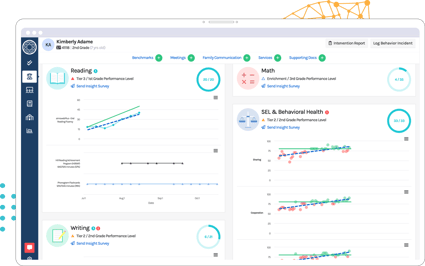
- Centralize student data across academics, behavior, attendance, and interventions
- Identify students who need support earlier
- Standardize intervention planning across schools
- Monitor student progress and intervention fidelity
- Document services for compliance and school improvement
- Give district leaders visibility into implementation and outcomes across all campuses
🔼 Success Story: Funding is only the first step. See how Community Consolidated School District 59 (CCSD59) transformed student support by bringing together intervention planning, student data, and collaboration in one MTSS platform.
The Impact Goes Beyond Implementation
Research conducted by Hobson & Company with Branching Minds district partners found that these districts reported:
- Reduced time spent creating intervention plans by 50%
- Reduced time spent on documentation and progress monitoring by 40%
- Reduced time spent in student support meetings by 40%
-1-1.png?width=900&height=905&name=Hobson-stat%20(1)-1-1.png)
When educators spend less time managing spreadsheets, tracking down data, and building reports manually, they have more time to focus on supporting students.
Start by looking at the funding streams available to your district and the systems currently in place to support students.
Put Illinois Funding Into Action
Illinois districts have more opportunities to MTSS infrastructure than many leaders realize.
See how Branching Minds helps Illinois districts strengthen RTI and MTSS implementation, support special education eligibility decisions, and build more connected systems of student support.


Maximize Federal Funds to Drive Student Success
Contact us for more information about how Branching Minds could fit into your school or district’s funding strategy.

.png?width=716&height=522&name=Funding%20in%20Texas%20(preview).png)
.png?width=716&height=522&name=Californias%20Budget%20Is%20Betting%20Big%20on%20MTSS%20and%20Community%20Schools%20%20(Preview).png)
-1.png?width=716&height=522&name=Washingtons%20RTI%20Requirement%20for%20SLD%20Eligibility(preview)-1.png)